
That Frustrating Moment When Your Garage Door Won't Stay Closed
You press the button on your remote, watch your garage door glide downward, and then — just before it reaches the floor — it stops and reverses right back up. You try again. Same thing. Maybe it works on the third attempt, maybe it doesn't. Either way, you're standing in your driveway in the Homestead heat wondering what's going on.
This is one of the most common garage door complaints we hear from homeowners across Homestead, Florida City, and the surrounding communities. The good news is that it's usually fixable, and understanding the cause can help you decide whether it's a quick DIY adjustment or something that needs a professional touch.
The Safety Reversal System: What It Is and Why It Matters
Before we get into the causes, it helps to understand why your garage door is designed to reverse in the first place. Every modern garage door opener manufactured after 1993 is required by federal law to include a safety reversal system. This system uses two main components to prevent the door from closing on a person, pet, or object:
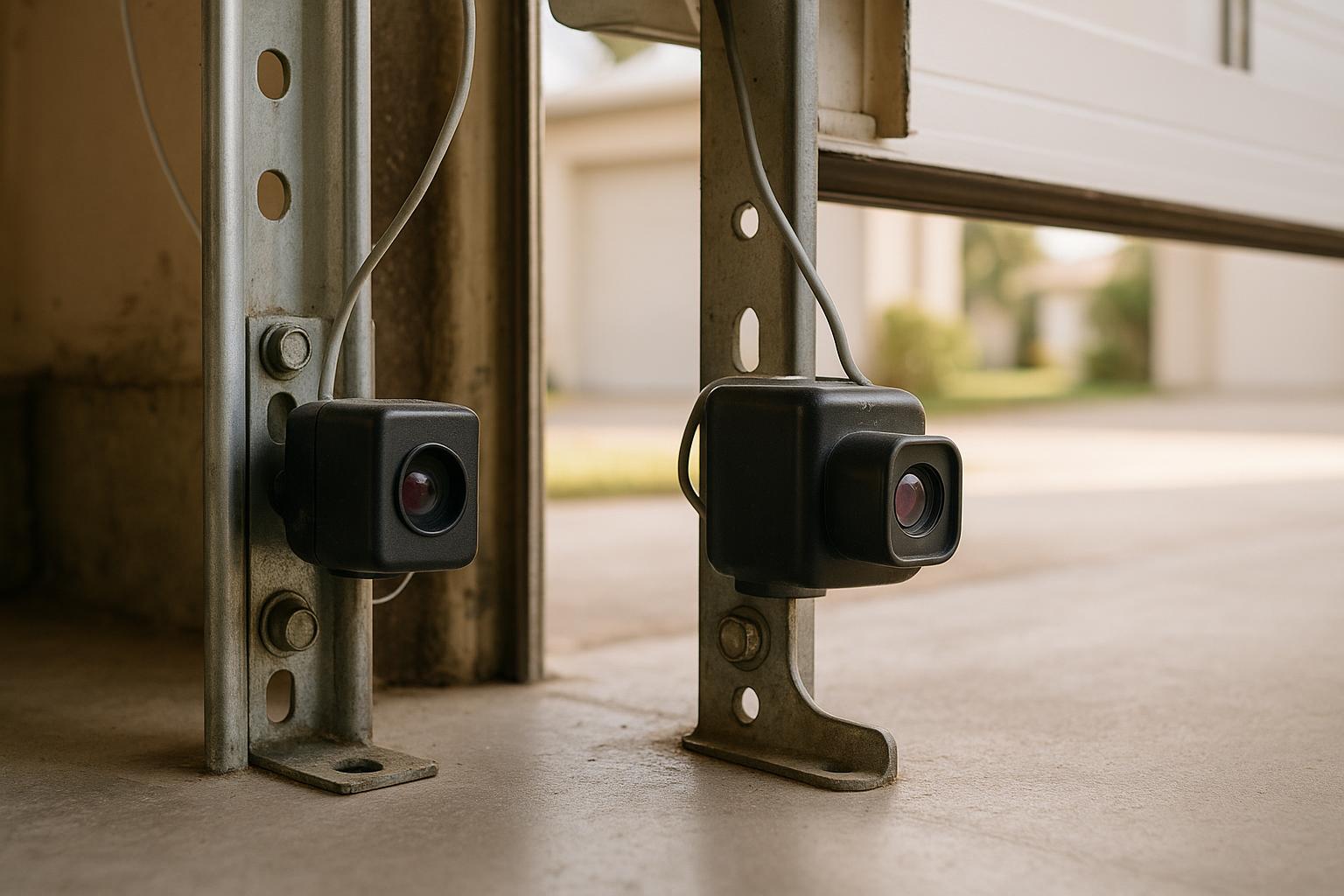
- Photo-eye sensors: Two small sensors mounted near the bottom of the door tracks on either side. They project an invisible beam across the opening. If something breaks that beam, the door reverses.
- Auto-reverse mechanism: If the door encounters physical resistance while closing — like hitting an object — it automatically reverses direction.
These features are critical safety mechanisms, especially in homes with children and pets. But when they malfunction or get triggered unnecessarily, they create the exact problem you're experiencing.
Common Causes of a Garage Door That Reverses Before Closing
1. Misaligned Photo-Eye Sensors
This is the number one cause of unexpected reversals, and it's especially common in Homestead homes. Our subtropical climate means humidity, rain, and even lawn care activities can knock these delicate sensors out of alignment. Each sensor has a small LED light — typically one green and one amber. If one of those lights is blinking instead of staying solid, the sensors aren't communicating properly.
To check alignment, get down to floor level and see if both sensors are pointing directly at each other. Even a slight bump from a broom, bicycle, or lawnmower can shift them just enough to break the beam.
2. Dirty or Obstructed Sensor Lenses
South Florida living means dealing with dust, pollen, cobwebs, and moisture — all of which can coat your photo-eye sensor lenses over time. A dirty lens can weaken the infrared beam enough to cause intermittent reversals. A simple wipe with a soft cloth can sometimes solve the problem instantly.
3. Incorrect Close-Force or Travel-Limit Settings
Your garage door opener has adjustable settings that control how far the door travels and how much force it uses to close. If the travel limit is set too short, the opener thinks the door has hit an obstruction before it actually reaches the floor, triggering a reversal. Similarly, if the close-force setting is too low, even minor friction in the tracks can cause the opener to reverse.
These settings are usually adjusted with small dials or screws on the back or side of the opener unit. Your owner's manual will show you where they are, but adjusting them incorrectly can create safety hazards, so proceed carefully.
4. Worn or Damaged Tracks
If your garage door tracks are bent, dented, or have accumulated debris, the door may bind or stick as it moves downward. The opener interprets this resistance as an obstruction and reverses. Inspect your tracks visually for any obvious damage, and clear away any dirt, leaves, or small objects that may have found their way inside.
5. Broken or Worn Springs and Cables
Your garage door springs do the heavy lifting — literally. They counterbalance the weight of the door so the opener doesn't have to work as hard. When springs weaken or break, the door becomes significantly heavier, and the opener may not have enough force to push it all the way down. Instead of forcing it, the safety system kicks in and reverses the door.
This is one repair that should always be handled by a professional. Garage door springs are under extreme tension and can cause serious injury if mishandled.
6. Wiring Issues
Over time, the wiring that connects your photo-eye sensors to the opener can become frayed, corroded, or damaged by pests. In older Homestead homes especially, we sometimes find that rodents or lizards have chewed through sensor wiring in the garage. If your sensor lights are completely off or behaving erratically, a wiring issue could be the culprit.
Quick Troubleshooting Steps You Can Try at Home
- Clean the sensors: Use a soft, dry cloth to gently wipe both photo-eye lenses.
- Check sensor alignment: Make sure both sensors are firmly mounted and pointing directly at each other. Look for steady LED lights on both units.
- Remove obstructions: Clear anything near the bottom of the door opening that might be breaking the sensor beam — even a leaf or cobweb can do it.
- Inspect the tracks: Look for visible dents, bends, or debris in the tracks on both sides.
- Test the door manually: Disconnect the opener by pulling the emergency release cord, then lift and lower the door by hand. If it feels extremely heavy or gets stuck, you likely have a spring or track issue.
If none of these steps resolve the problem, it's time to call in a professional.
When to Call a Garage Door Professional
Some reversal issues are simple fixes. Others point to deeper mechanical or electrical problems that require expertise and specialized tools. You should call a technician if:
- The door is visibly sagging or crooked when it moves
- You hear loud grinding, popping, or snapping sounds
- A spring appears broken or stretched
- The opener is more than 10-15 years old and struggling consistently
- You've tried the troubleshooting steps above with no improvement
At Homestead Garage Door Solutions, we diagnose reversal issues every week for homeowners in Homestead, Naranja, Leisure City, Princeton, and Cutler Bay. In most cases, we can identify and fix the problem in a single visit — whether it's a sensor realignment, a travel-limit adjustment, a spring replacement, or an opener repair.
Prevent Future Problems with Regular Maintenance
The best way to avoid unexpected garage door issues is with routine maintenance. A professional tune-up once or twice a year keeps your springs, tracks, rollers, sensors, and opener in top condition. This is especially important in South Florida, where heat, humidity, and hurricane season put extra stress on garage door components.
During a maintenance visit, we inspect every part of your system, lubricate moving parts, test the safety reversal system, and catch small problems before they turn into expensive repairs.
Don't Ignore a Reversing Garage Door
A garage door that won't close properly isn't just an inconvenience — it's a security risk. An open garage is an invitation for theft, pests, and weather damage. If your door keeps reversing and you can't figure out why, reach out to Homestead Garage Door Solutions. We'll get your door closing the way it should — safely and reliably.