
Your Garage Door Springs Are Under More Stress Than You Think
Every time your garage door opens and closes, the springs do the heavy lifting — literally. A standard two-car garage door can weigh between 150 and 250 pounds, and the springs are responsible for counterbalancing all of that weight. Over time, the constant tension and release cycle wears them down, and eventually, they fail.
For homeowners in Homestead, the combination of daily use, humidity, and salt air from the coast accelerates this wear even further. Most garage door springs are rated for about 10,000 cycles — that's roughly 7 to 10 years of average use. But if you're opening and closing your garage door multiple times a day, that lifespan shrinks considerably.
The good news is that springs rarely break without warning. If you know what to look for, you can catch the problem early, schedule a replacement on your terms, and avoid the inconvenience and safety hazard of a sudden failure.
7 Warning Signs Your Garage Door Springs Are Failing
1. The Door Feels Heavier Than Usual
Try this simple test: disconnect your garage door opener by pulling the manual release handle, then lift the door by hand. A properly balanced door with healthy springs should feel relatively light and stay open about three to four feet off the ground. If the door feels extremely heavy or slams back down the moment you let go, your springs are losing their tension and need attention.
2. The Door Opens Unevenly or Crooked
If your garage door tilts to one side as it opens, one of your springs may be weaker than the other or has already broken. This uneven movement puts extra strain on your opener, tracks, and cables, which can lead to a cascade of additional problems. If you notice your door looking lopsided, stop using it and call a professional.
3. You Hear a Loud Bang From the Garage
Many Homestead homeowners tell us they heard what sounded like a gunshot or a car backfiring coming from their garage. That loud bang is often the sound of a torsion spring snapping. The spring unwinds rapidly when it breaks, releasing a tremendous amount of stored energy. If you hear this sound, do not attempt to operate the door. A broken spring under tension is extremely dangerous to handle without proper tools and training.
4. There's a Visible Gap in the Spring
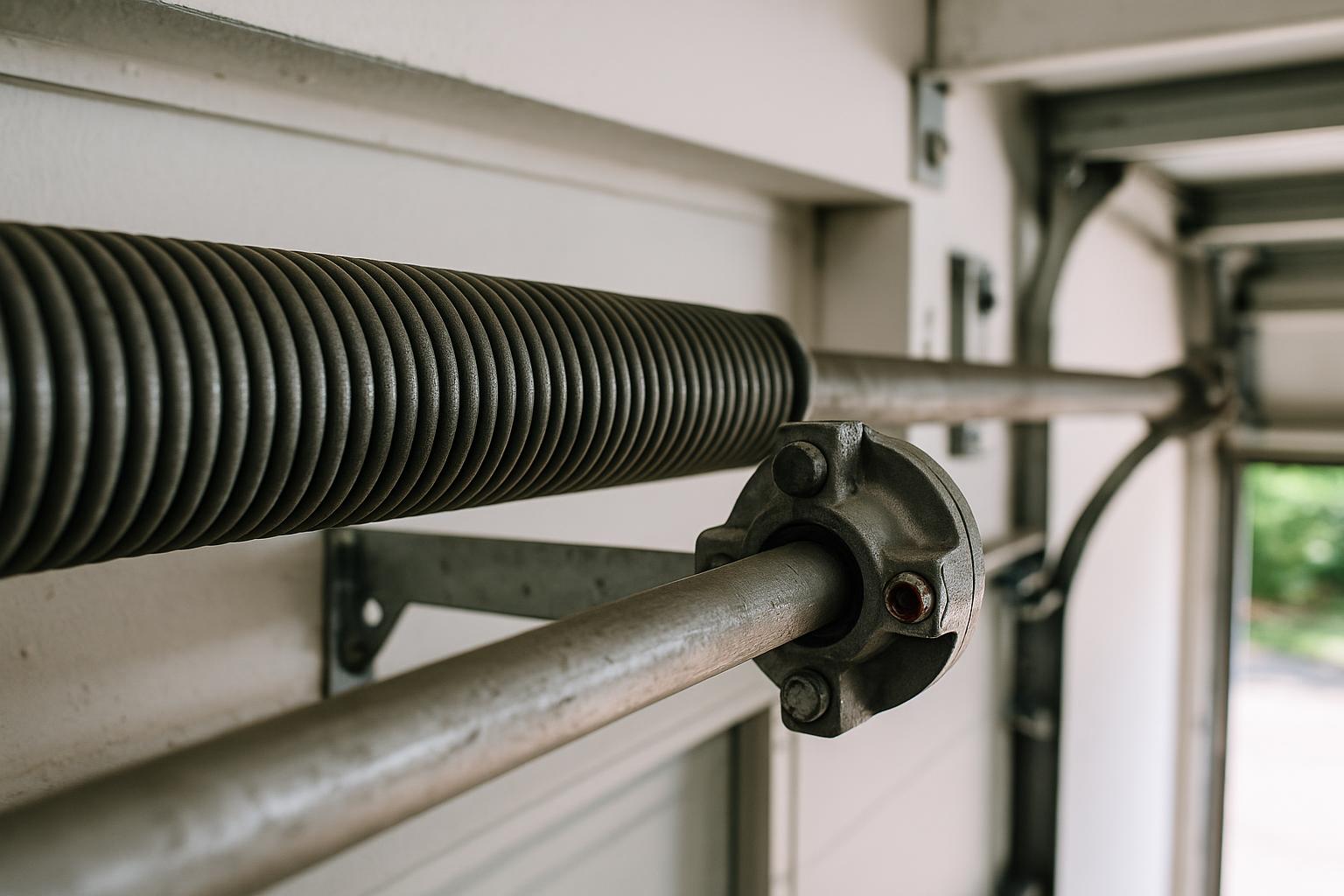
Take a look at the torsion spring mounted on the metal shaft above your garage door. When a spring is intact, the coils are tightly wound together with no gaps. If you see a visible separation or gap of an inch or two between the coils, the spring has already broken and needs immediate replacement.
5. The Opener Struggles or Stops Mid-Cycle
Your garage door opener is designed to work in partnership with the springs. When the springs weaken, the opener has to compensate by working harder to lift the door. You might notice the motor straining, the door moving slower than usual, or the opener stopping partway through the cycle. Continuing to use the opener in this condition can burn out the motor, turning a spring replacement into a much more expensive repair.
6. Cables Are Loose or Hanging
The lift cables on either side of your garage door work together with the springs to raise and lower the door safely. When a spring breaks, the cables can lose tension and appear loose, tangled, or hanging off the drums. Loose cables are a clear indicator that something has gone wrong with the spring system.
7. Rust and Corrosion on the Springs
Living in Homestead means dealing with high humidity year-round, and that moisture takes a toll on metal components. If you notice rust building up on your garage door springs, it's more than a cosmetic issue. Rust increases friction between the coils, accelerates wear, and can reduce the spring's lifespan by several years. Regular lubrication with a silicone-based spray can slow this process down, but heavily corroded springs should be replaced before they fail unexpectedly.
Why You Should Never Replace Garage Door Springs Yourself
We understand the DIY spirit — and there are plenty of garage door tasks that handy homeowners can tackle on their own. Spring replacement is not one of them.
Garage door torsion springs are wound under extreme tension. If they're released improperly, they can cause serious injury or even death. Every year, emergency rooms across the country treat people who attempted DIY spring replacements and ended up with broken bones, lacerations, or worse.
Professional technicians use specialized winding bars, clamps, and safety equipment to replace springs safely. They also know how to properly match the spring size and tension to your specific door weight and size, which is critical for balanced operation and longevity.
Torsion Springs vs. Extension Springs: What's on Your Door?
There are two main types of garage door springs, and knowing which type you have helps you understand what to expect during a replacement:
- Torsion springs are mounted horizontally on a metal shaft above the door opening. They're the more common type on modern garage doors and are generally considered safer and longer-lasting.
- Extension springs run along the horizontal tracks on either side of the door. They stretch and contract to provide lifting force. These are more common on older installations and single-car garage doors.
If your home still has extension springs without safety cables running through them, we strongly recommend upgrading. Safety cables prevent a broken extension spring from becoming a dangerous projectile inside your garage.
How Often Should Garage Door Springs Be Replaced?
There's no universal schedule because it depends on usage, but here are some general guidelines:
- Standard-life springs: 7 to 10 years with average use (2-4 cycles per day)
- High-cycle springs: 15 to 20 years, designed for heavier use
- Heavily used doors (families with multiple drivers, home businesses): Consider high-cycle springs from the start to avoid premature failure
If your springs are approaching the end of their expected lifespan, proactive replacement is almost always cheaper and less stressful than waiting for them to break. A planned replacement means you choose the timing — an emergency repair on a Saturday morning when you can't get your car out of the garage is never convenient.
What to Do If Your Spring Breaks
If you suspect a broken spring, follow these steps:
- Do not try to open the door using the opener or by hand.
- Disconnect the opener if the door is in the closed position to prevent accidental activation.
- Keep people and pets away from the door until it's been inspected.
- Call a professional to assess the situation and replace the spring safely.
At Homestead Garage Door Solutions, we carry a wide selection of springs on our service trucks, which means most spring replacements can be completed in a single visit. We serve homeowners throughout Homestead, Florida City, Naranja, Leisure City, Princeton, and Cutler Bay with fast, same-day service whenever possible.
Keep Your Garage Door Running Safely
Your garage door is the largest moving component of your home, and the springs are its most critical mechanical part. Paying attention to the warning signs we've outlined can help you avoid unexpected breakdowns, protect your family from a safety hazard, and save money by addressing the problem before it damages other components.
If you've noticed any of these warning signs — or if it's simply been a while since anyone looked at your springs — give us a call. We'll inspect your entire spring system, give you an honest assessment, and make sure your garage door is operating safely and smoothly.