
Your Garage Door Works Hard — Are You Taking Care of It?
Think about how many times you open and close your garage door every day. Twice? Four times? Maybe more? For most Homestead families, the garage door is the largest moving part of their home and the most frequently used entry point. Yet it's also the one thing almost nobody thinks about maintaining — until it stops working.
A well-maintained garage door should last 15 to 30 years, but neglect can cut that lifespan dramatically. Worse, a poorly maintained door can become a safety hazard, especially during South Florida's intense storm seasons. So how often should you actually have your garage door serviced, and what does that maintenance involve?
The Short Answer: At Least Once a Year
At a minimum, your garage door should receive a professional inspection and tune-up once per year. For most homeowners in Homestead and the surrounding areas like Florida City, Naranja, and Cutler Bay, scheduling annual maintenance in the spring — before hurricane season kicks in — is the smartest move.
However, there are situations where you should consider servicing your garage door more frequently:
- Heavy daily use: If your household opens and closes the garage door six or more times a day, consider a tune-up every six months.
- Older garage doors: Doors that are more than 10 years old benefit from more frequent inspections as components begin to wear.
- After severe weather: If your area was hit by a hurricane, tropical storm, or even sustained high winds, have your door inspected afterward even if it seems fine.
- Noisy or sluggish operation: Strange sounds, slow movement, or jerky motion are signs that something needs attention now, not at your next scheduled visit.
What Does Professional Garage Door Maintenance Include?
A lot of homeowners wonder whether professional maintenance is really worth it when they could just spray some WD-40 on the tracks and call it a day. The truth is, a proper garage door tune-up goes far beyond basic lubrication. Here's what a thorough maintenance visit should cover:
Visual Inspection of All Components
A trained technician will examine every part of your garage door system, including the panels, tracks, rollers, hinges, cables, springs, and weatherstripping. They're looking for signs of wear, rust, misalignment, or damage that could lead to bigger problems down the road.
Spring Tension Testing
Your garage door springs are under enormous tension and are responsible for doing the heavy lifting — literally. During maintenance, a technician will check that the springs are properly balanced and tensioned. Improperly balanced springs force your opener to work harder, shortening its lifespan and increasing energy costs.
Lubrication of Moving Parts
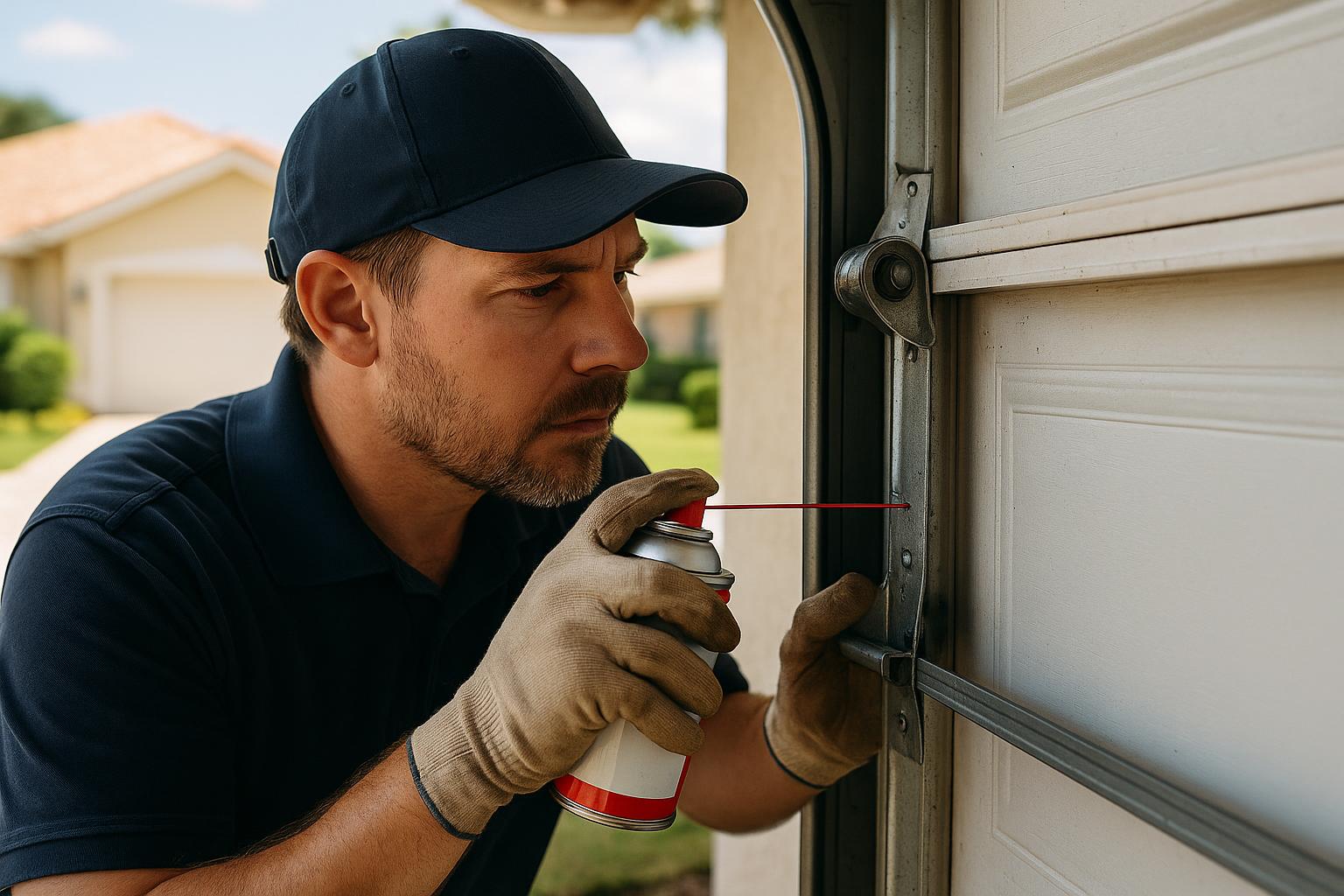
All moving components — including rollers, hinges, bearings, and the spring system — need proper lubrication with a garage-door-specific product. This reduces friction, minimizes noise, and prevents premature wear. And no, WD-40 is not the right product for this job. It's a solvent, not a long-lasting lubricant.
Track Alignment and Cleaning
Over time, tracks can shift slightly out of alignment, causing the door to bind or operate unevenly. Dirt, debris, and even small insects can accumulate in the tracks, especially here in Homestead where the warm climate keeps pests active year-round. A technician will clean the tracks and verify proper alignment.
Opener Safety Testing
Your garage door opener includes critical safety features like auto-reverse sensors and force settings. Federal law has required these safety mechanisms since 1993, and they need to be tested regularly to make sure they're functioning correctly. This is especially important for families with children or pets.
Weatherseal Inspection
The rubber weatherstripping along the bottom and sides of your garage door keeps out rain, wind, pests, and debris. In South Florida's heat and humidity, weatherseals degrade faster than in cooler climates. A maintenance visit will identify cracked or missing seals so they can be replaced before they allow water damage or pest intrusion.
Hardware Tightening
The constant vibration of a garage door opening and closing hundreds of times per month will gradually loosen nuts, bolts, and brackets. A technician will tighten all hardware to keep everything secure and operating safely.
What You Can Do Between Professional Visits
Annual professional maintenance is essential, but there are simple things you can do monthly to keep your garage door in good shape between service appointments:
- Listen for unusual sounds. Grinding, scraping, popping, or squealing noises are early warning signs that something is off.
- Watch the door operate. Stand inside the garage and watch the door go up and down. It should move smoothly and evenly without jerking, hesitating, or sagging on one side.
- Test the auto-reverse. Place a roll of paper towels on the ground in the door's path and press the close button. The door should reverse immediately upon contact. If it doesn't, stop using the door and call a professional.
- Keep the tracks clear. Wipe down the inside of the tracks with a damp cloth to remove dust and debris. Don't use lubricant on the tracks themselves — this can actually cause the rollers to slide instead of rolling properly.
- Inspect the weatherstripping. Look at the rubber seal along the bottom of the door. If it's cracked, brittle, or missing chunks, it's time for a replacement.
The Cost of Skipping Maintenance
Homeowners sometimes skip garage door maintenance to save money, but this almost always costs more in the long run. Here's what neglect can lead to:
- Premature spring failure: Replacing a broken spring is significantly more expensive than the maintenance that could have extended its life.
- Opener burnout: When components aren't lubricated or balanced, your opener motor works overtime and burns out years ahead of schedule.
- Panel damage: A misaligned track or worn roller can cause panels to crack or warp, potentially requiring full door replacement.
- Safety hazards: A garage door weighs several hundred pounds. Worn cables, broken springs, or malfunctioning safety sensors can turn it into a serious danger.
- Storm vulnerability: Living in Homestead means your garage door needs to be in top condition when hurricane season arrives. A weakened door is more likely to fail during high winds, which can lead to catastrophic structural damage to your entire home.
When to Call a Professional Right Away
While annual maintenance handles most issues before they become emergencies, certain situations require immediate attention. Call a garage door professional right away if:
- The door won't open or close at all
- A spring or cable has visibly snapped
- The door is hanging at an angle or has come off the tracks
- You hear a loud bang from the garage (often a sign of a broken spring)
- The door closes on objects without reversing
These are not DIY situations. Garage door springs and cables are under extreme tension and can cause serious injury if handled improperly.
Keep Your Garage Door Running Smoothly
Your garage door is one of the hardest-working parts of your home, and it deserves regular attention. For homeowners in Homestead and nearby communities like Leisure City and Princeton, scheduling annual maintenance — ideally before storm season — is one of the easiest ways to protect your home, your family, and your wallet.
At Homestead Garage Door Solutions, our maintenance service covers every component of your garage door system so you can have confidence that it will perform reliably all year long. If it's been more than a year since your last tune-up, or if you've never had one, now is the perfect time to schedule a visit.